Accelerator Program for Black EntrepreneursThe Future Collective
- Head of Design…… Nadav Barkan
- Role…… Lead Designer
- Team…… Kameron Davis, James Pearce
- Typefaces…… Macan, Termina, Neilvard One
Awards
The Anthem Awards, Winner (Bronze) Community Engagement
Brief
The Future Collective for Black-Owned Businesses is an accelerator program hosted in partnership with 1863 Ventures, supporting Black entrepreneurs through funding, mentorship, education, and community. By its third year, the program had grown significantly, bringing with it a new challenge: the website needed to evolve as quickly as the program itself.
A Growing Program Outgrew Its Website
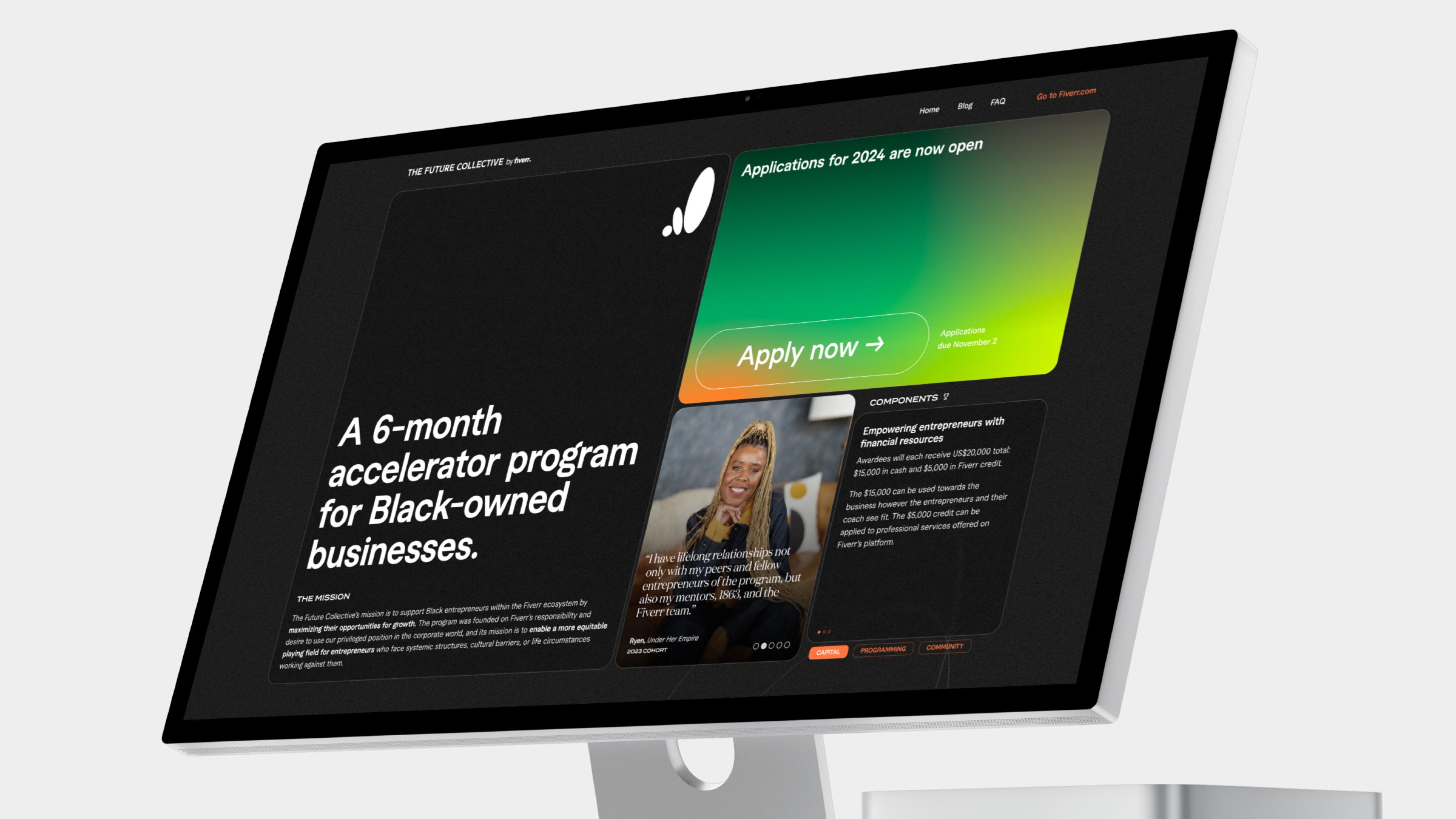
The Future Collective had evolved far beyond a traditional campaign site. Applications opened and closed. New cohorts were announced. Mentors rotated in. Resources accumulated. Success stories continued long after each cohort ended.
The existing website structure couldn't keep pace. What started as a relatively straightforward program page had become a living ecosystem of content with different priorities throughout the year. During recruitment periods, applications needed to take center stage. Later, the focus shifted toward founder stories, mentorship, educational programming, and community building.
The challenge wasn't simply redesigning the website. The challenge was designing a website that could evolve alongside the program itself.
Building on an Existing Narrative
A tradition had already emerged around Future Collective. Each year, Fiverr partnered with a Black freelance artist to help shape the visual identity of the program.
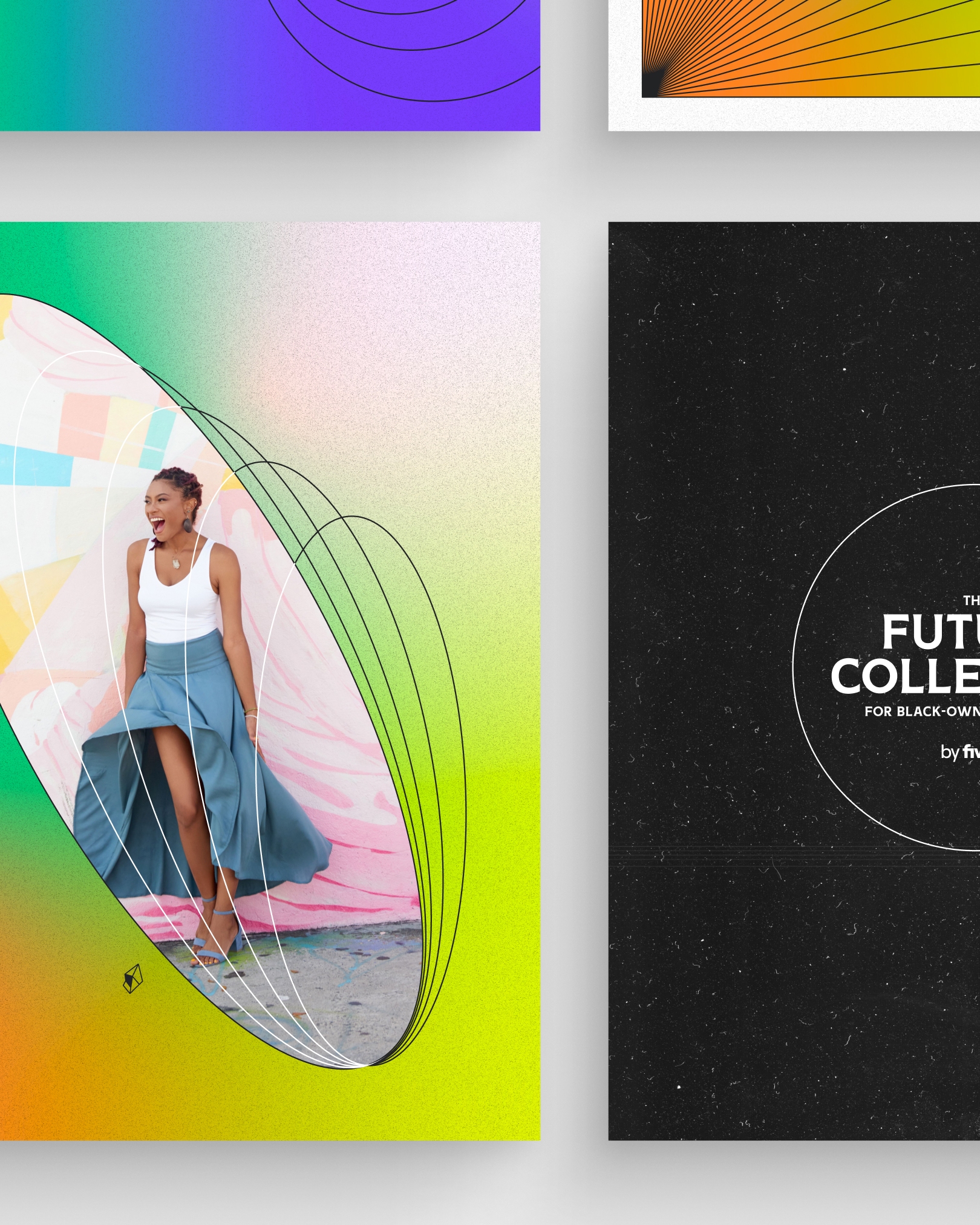
Khara Woods' identity leaned on the diamond metaphor to visualize the beauty, pressure, and resilience of the entrepreneurial experience. Hank Washington expanded the concept further through light, motion, and dimensionality.
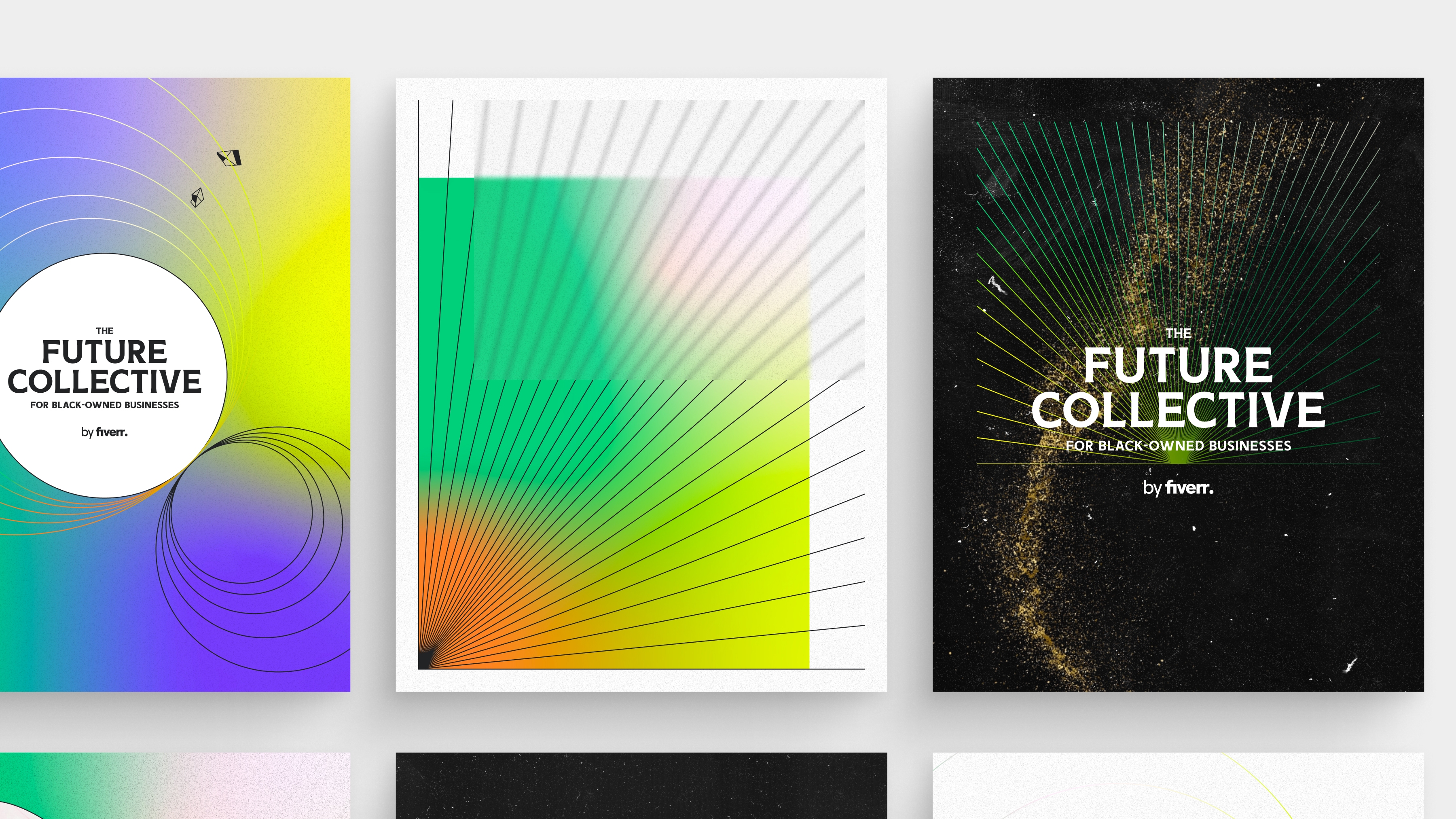
Kicking off its third year, artist Kameron Davis introduced a narrative titled 'From Space Dust to Diamonds', exploring the relationship between chaos and clarity, noise and focus, uncertainty and transformation.
The concept became the foundation for a visual language built around celestial gradients, textures, orbital forms, and dimensional imagery—elements that could scale across web, social, video, and campaign materials while maintaining a cohesive identity throughout the program.
Create a Modular Content Framework
Rather than designing a collection of fixed pages, I focused on building a flexible content system that could adapt as the program changed.
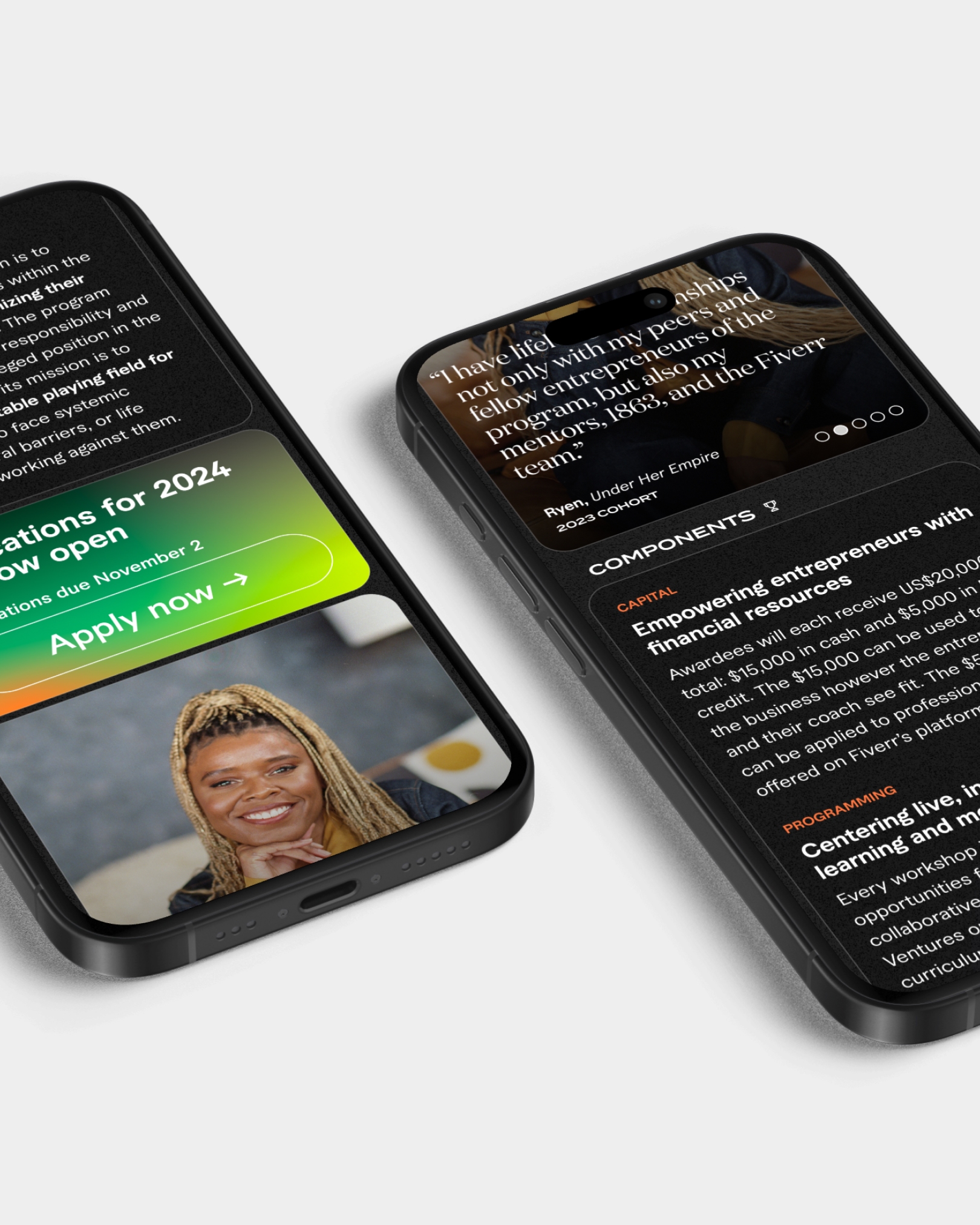
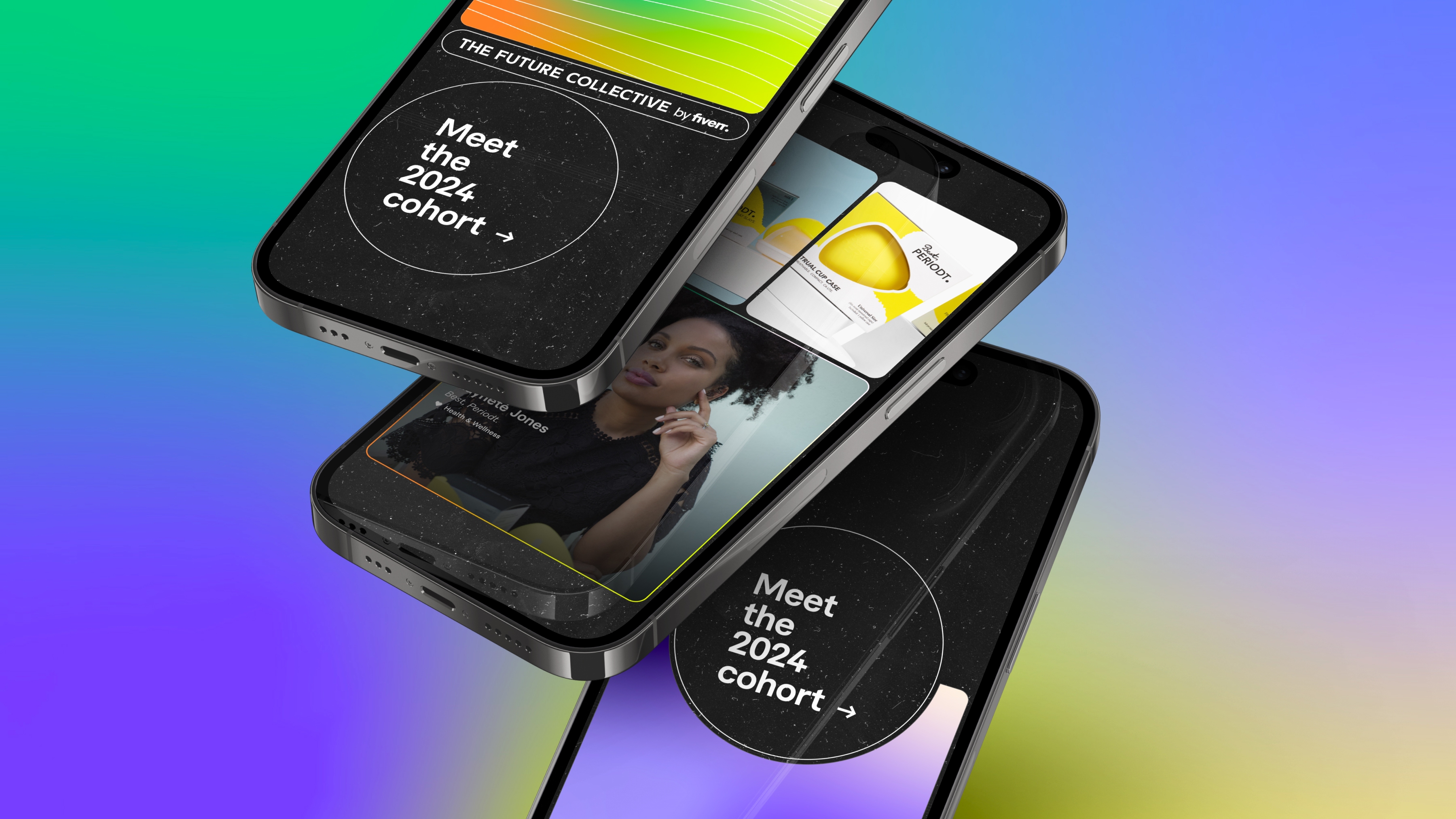
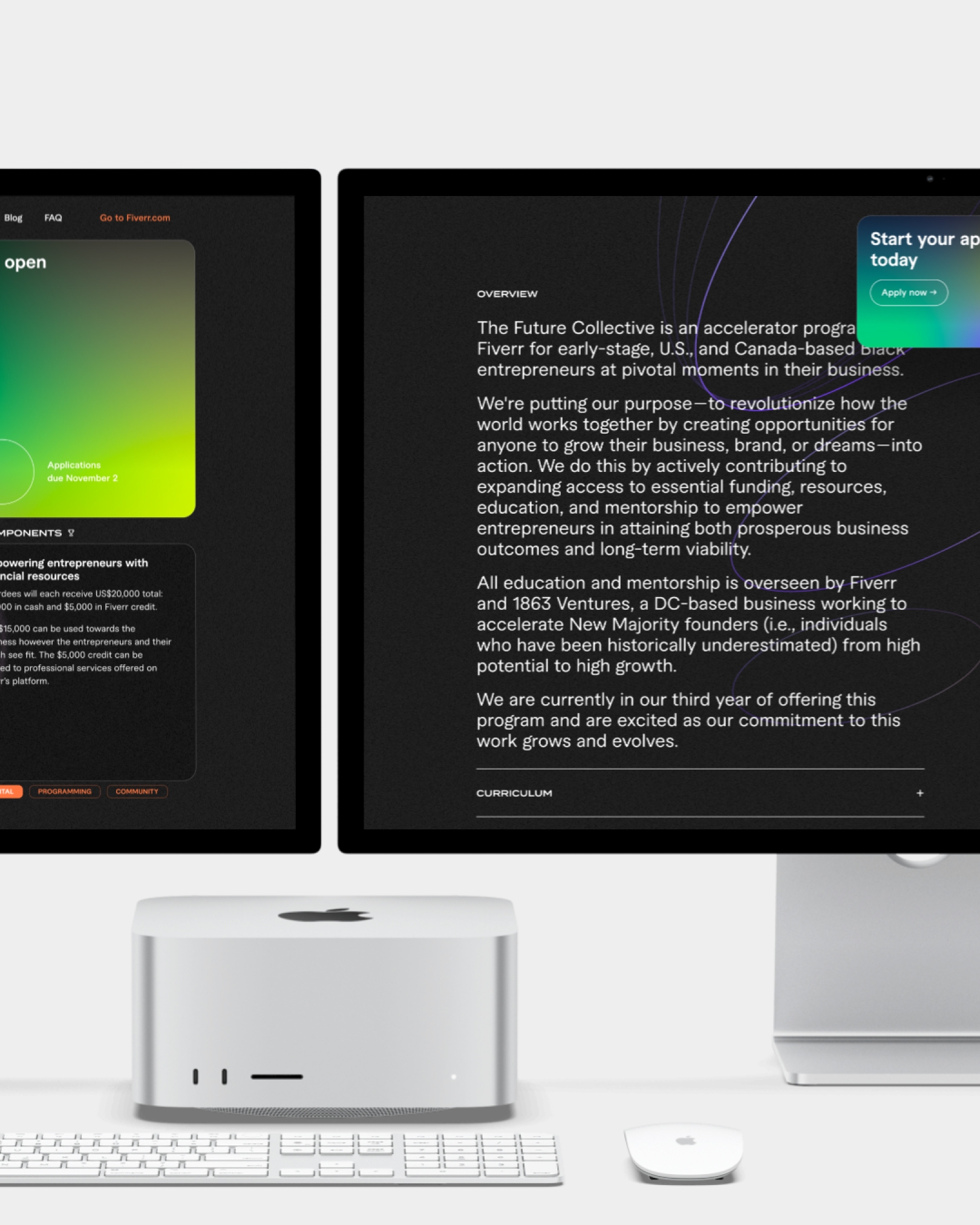
I developed interchangeable content modules, flexible homepage architecture, reusable component patterns, hierarchy systems driven through color and scale. This allowed stakeholders to promote applications, feature founders, surface educational resources, highlight mentors, spotlight current cohorts depending on where the program sat in its lifecycle—without redesigning the experience every season.
Designing for Multiple Audiences
Not every visitor arrived with the same goal. Some wanted to apply immediately. Others wanted to understand the curriculum, explore previous cohorts, learn about the mentorship opportunities, or evaluate whether the program was right for their business.
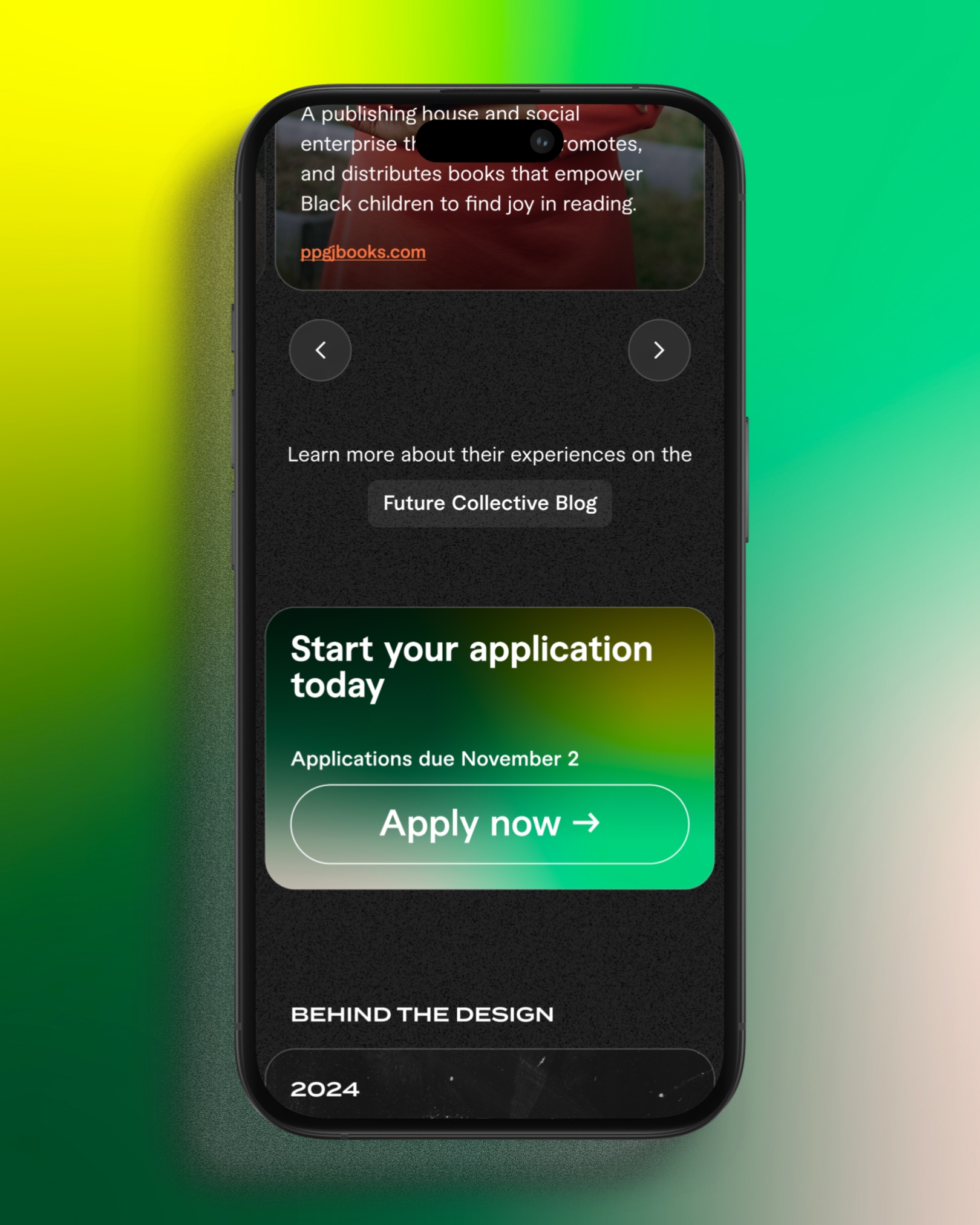
Rather than forcing everyone through the same experience, content was organized in layers. Core program pillars—including Capital, Programming, and Community—were surfaced through concise highlights that helped visitors quickly understand the value of the program. Deeper sections further down the page provided expanded information for visitors looking to dive into the details.
The result was a more approachable experience that supported both casual exploration and serious application research.
Balancing Storytelling and Conversion
The Future Collective wasn't just an application portal. It was also a celebration of the entrepreneurs participating in the program.
Early concepts leaned too heavily toward one side of the equation or the other. Some versions packed too much information above the fold, making it difficult to identify the primary action. Others devoted so much space to applications that the broader story of the program was lost.
Through iteration, the final experience established a clearer hierarchy between immediate actions and supporting content. Application messaging remained highly visible during recruitment periods while still leaving room for founder stories, mentorship opportunities, educational resources, and community programming to shine.
Color, scale, and modular content blocks became useful tools for directing attention without overwhelming visitors or sacrificing flexibility.
A System Built to Evolve
One recurring challenge was the application process itself. Application deadlines, eligibility requirements, and program details changed throughout the year. Information that was critically important during recruitment periods often became irrelevant once applications closed.
Rather than embedding application content throughout the site, it was isolated into dedicated modules that could be promoted, updated, or removed independently while leaving the rest of the experience intact.
This same flexibility extended across cohort spotlights, founder stories, mentorship content, educational resources, and community updates—allowing the platform to remain useful long after applications ended.
The result was a website that functioned less like a campaign page and more like a living content platform.
Outcome
When the site launched, the response exceeded expectations. The program received more than 7,000 applications, helping the team identify a select group of entrepreneurs who would each receive $20,000 in funding, mentorship, education, and community support through the program.
The project was later recognized with a Bronze Anthem Award for Community Engagement.
More importantly, The Future Collective gained a flexible foundation capable of supporting future cohorts, evolving content priorities, and annual creative refreshes without requiring a complete redesign each year.
Reflection
This project reinforced a lesson I've encountered repeatedly throughout my career: flexibility can be just as important as aesthetics.
The visual identity brought the program to life, but the longer-term challenge was creating a framework capable of evolving alongside the people, stories, and opportunities it was designed to support. By treating the website less like a static marketing page and more like an adaptable content system, we created an experience that could continue growing with Future Collective long after launch.